
A short, and extended essay on the political principles informing the practice of the writer, composer, and artist Mike de Sousa.
1. The Door Is Open: Art, Attention, Difference, And Another Culture
[1500 words · 5 minute read]
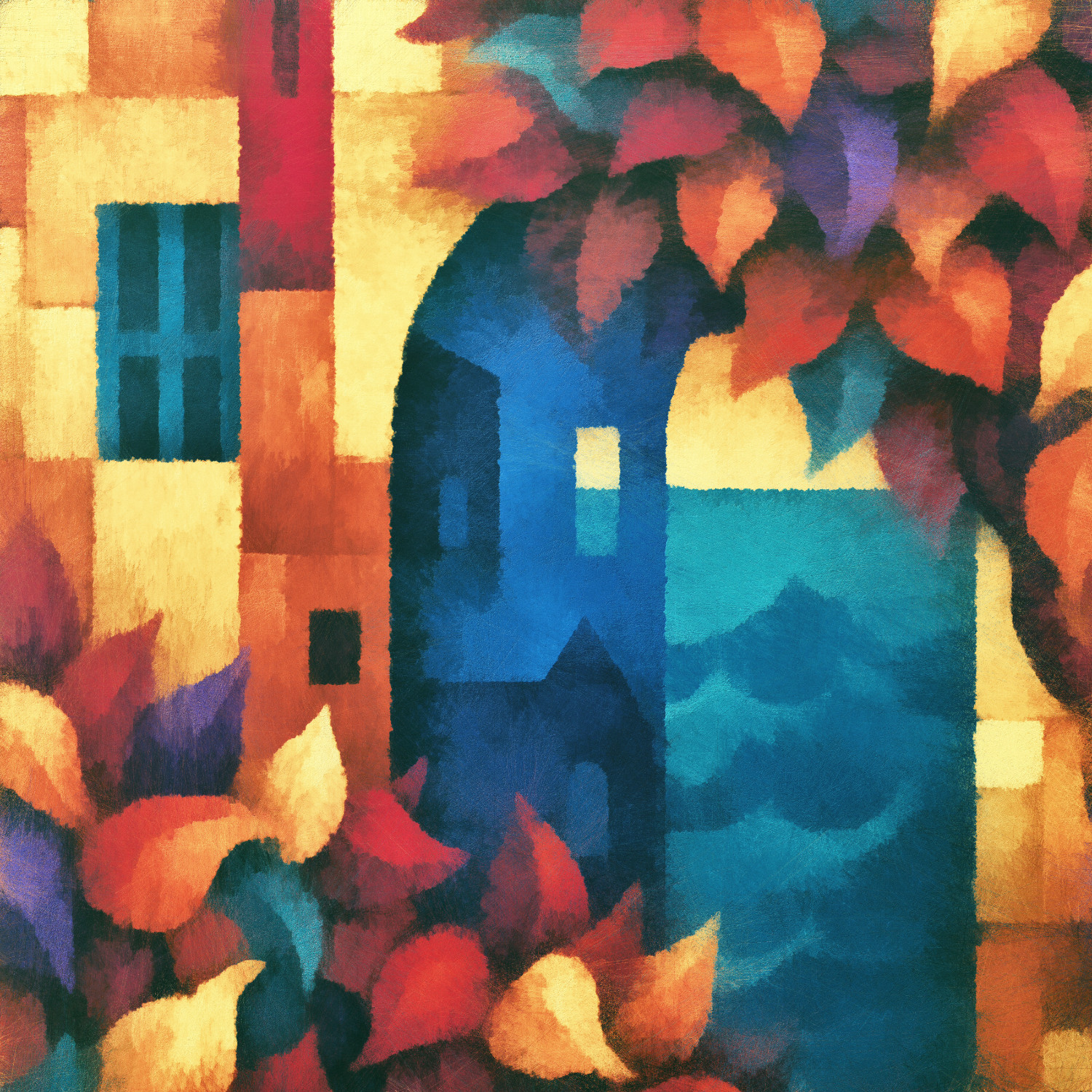
2. The Door Is Open [artwork]
3. Extended Companion Essay [6,495 words · 25 minute read]
4. Editorial Notes [528 words · 2 minute read]
These two companion essays present how art can be a socialist, anti-capitalist practice resisting the reduction of people, nature, attention, and creativity to profit and utility. Through diverse forms, art can foster care, ecological responsibility, accessibility, difference, and meaningful relationships, helping imagine another culture without replacing collective political or material change. The extended essay with its developed architecture gives a fuller account of why art matters, while the short essay provides an accessible account of what art can do within a political culture.
I take a socialist and anti-capitalist approach to art and ideas because capitalism does not only distribute wealth unequally; it also shapes how people understand value, freedom, nature, attention, and one another. Its logic encourages us to see the world through ownership, usefulness, productivity, competition, growth, and profit.
A socialist position, understood broadly, is a commitment to shared responsibility, equality, cooperation, access, care, and dignity. It asks whether access to the conditions of a meaningful life should depend upon wealth and purchasing power, and whether people should be required to justify their existence through productivity or usefulness.
My practice is principle-led rather than party-led. It resists the reduction of people, nature, and art to economic functions. Its central values are relationship over possession, care over extraction, attention over capture, cooperation over competition, and dignity over utility. [editorial note]
Capitalism does not only organise the production and distribution of goods. It also influences the language through which life is understood. A person may be valued according to their economic contribution, land according to its development potential, an idea according to its commercial application, and an artwork according to its price or position within a cultural market. The market becomes not simply one system among others, but a way of seeing. People are encountered according to the roles they can perform within it: as viewers whose attention can be held, consumers whose activity can be sustained, workers whose output can be increased, and identities whose habits can be tracked and addressed. The natural world is understood in similarly instrumental terms, as something available for use, development, ownership, or profit. Attention also becomes part of this process, valued less as a human capacity than as a resource to be captured, measured, and converted into revenue.
What happens to care, contemplation, uncertainty, beauty, grief, and shared meaning when value is measured primarily through price and productivity? These qualities may be difficult to quantify, but they are among the conditions that are essential to human existence, even when they do not produce direct profit. The problem is not that economic measurement has no place. Material conditions matter, and labour requires recognition and support. The problem is allowing economic measurement to become the final authority over human, cultural, and ecological life.
Art can resist this reduction. It preserves forms of value that do not require conversion into economic value. It can allow something to exist without being immediately used, explained, owned, or optimised. Its resistance may be quiet, but it is not politically neutral.
Art offers more than information or representation. It can provide emotional, intellectual, spiritual, aesthetic, symbolic, and political contexts for living. Art can create spaces for wonder, grief, connection, and transcendence without prescribing a single account of what is sacred.
A visual artwork can hold a viewer in recognition or uncertainty. Music can create an emotional context before the mind has formed an explanation. A poem can give language to something previously felt but not articulated. Art does not need to prescribe one way of living in order to contribute to a meaningful life.
To make art is to remain with something long enough for it to resist immediate resolution. To experience it is to enter that process of attention from another position. It is to notice what the first idea did not contain, to respond to what emerges, and to allow the work to change the person making it. The finished artwork is the result of a relationship between thought, material, memory, skill, uncertainty, and time.
Attention has become an increasingly contested resource. Digital systems compete for it, redirecting it towards engagement and revenue. The viewer is often treated less as a person than as a measurable quantity.
Against this, art can offer another economy of attention. An artwork may ask us to slow down, return, look again, or remain with an image that does not resolve itself immediately. Art creates relationships that are not governed entirely by speed, use, possession, or measurable response.
My practice moves between image, text, and music because different ideas require different forms. Whether the medium communicates through light, meaning, or sound, art’s forms are distinct but not hierarchical. The appropriate form depends partly upon what the work is trying to make possible.
Accessibility should not be confused with simplification. An artwork can be open without being empty, offering immediate pleasure while containing further possibilities. Different visitors may enter through different forms, and no single route needs to be treated as correct.
My intention is not to construct a funnel through which every visitor is directed towards a predetermined conclusion or product. It is to create a field in which paths cross and meanings emerge through movement. The door is open, but no one is required to walk through every room.
Different elements do not need to become identical in order to belong together. Image, poetry, music, prose, technology, biography, political reflection, and the natural world may occupy the same wider field without losing their distinct qualities. Meaning can arise through relationship rather than uniformity.
To communicate is to attempt understanding across differences of experience, history, perspective, and form of being. This applies to the relation between artist and audience, between people, between humans and nature, and between humans and synthetic systems.
Synthetic intelligence extends these ideas. The issue is not only whether artificial systems can imitate language or produce images, but how we respond to something that appears to communicate while remaining fundamentally unlike us. Who owns and benefits from these systems? Whose labour and data make them possible? What environmental infrastructures are required? How are they are used in surveillance, employment, warfare, education, and culture? These questions are political whether or not a system possesses an interior life.
Disciplined agnosticism means remaining uncertain about synthetic experience while opposing exploitation, opacity, domination, and unaccountable control.
The same principle applies to the natural world. An interest in the sky, stars, landscapes, and changing conditions of light is not simply an interest in picturesque scenery. It is connected to an understanding that the world exceeds the purposes assigned to it.
To look at the stars at night is to look at something that is at once ordinary and unknowable.
The stars cannot be easily incorporated into the logic of utility. They remind us that reality is larger than the systems through which human beings organise life. The air, water, soil, plants, animals, weather, and seasons are not passive backgrounds to human activity. They are among the conditions through which life is possible.
Art cannot solve ecological crisis or replace political action. Its contribution is indirect: it can alter what people notice, value, imagine, and feel responsible for. It can help us encounter the world as more than material, scenery, or resource. Art can also be encountered without being owned. A person may remember an image, carry it into their life, discuss it, or return to it through a digital archive without possessing the original object. Online publication takes place within commercial systems, but it can still create broader forms of access.
The political dimension of art lies partly in its refusal to accept the existing organisation of value as inevitable. A different culture would give greater importance to relationship than possession, care than extraction, attention than capture, cooperation than competition, and dignity than utility.
Art can contribute to such a culture not only by representing an alternative society, but by enacting different relationships in the present. It can make something available without demanding possession. It can allow complexity without turning complexity into privilege. It can permit disagreement without contempt and give attention to vulnerability without exploiting it.
Art can also reproduce hierarchy, turn suffering into spectacle, reinforce ownership, and convert attention into another form of consumption. Its political significance depends partly upon how it is made, circulated, supported, and encountered: who can access it, whose labour is recognised, and what kinds of relationships it creates.
I take a socialist and anti-capitalist approach to art because I try to resist a culture in which value is governed entirely by price, usefulness, ownership, and control. This does not require art to become propaganda, or every viewer to reach the same conclusion. It requires art to make room for other forms of relation and value. Art cannot replace collective organisation, material redistribution, or institutional change. But it can alter the terms of an experience. It can let us experience the familiar as strange, connect private feeling with collective life, and keep open the possibility that the present arrangement of society is neither natural nor permanent.
The door is open, but the room is not empty. It contains a refusal of domination, reduction, exploitation, and indifference; an attention to life, difference, access, and responsibility; and the possibility that another culture might be made through the ways we attend, create, care, and live together with difference.
My Word · Your Word · Our World
. . .
A single letter separates 'word' and 'world' in this six word poem. No matter what my beliefs, my politics, my values, my hopes or fears, my word is only as strong as the trust you give it.
What and how I, you, and we say, makes the difference between us.
What does it mean to be a socialist, or to be critical of capitalism?
These terms are often used as though their meanings were self-evident. Yet both have acquired a range of historical, political, and cultural associations.
Socialism may be understood as a commitment to collective ownership, the redistribution of wealth, public services, economic equality, workers’ rights, or the organisation of society around shared rather than private interests. It may also be associated with particular political parties, states, historical regimes, or forms of governmental authority.
Capitalism can be understood as an economic system based upon private ownership, markets, wage labour, competition, investment, and the pursuit of profit. But it is also more than an economic system. It can become a way of organising social life and perceiving the world. It can influence what we value, how we measure success, how we understand freedom, and what kinds of relationships we consider possible.
To be critical of capitalism is not necessarily to reject every form of exchange, private activity, enterprise, or personal possession. Nor does it require belonging to a particular political party or accepting a complete and predetermined programme. It may instead mean questioning a society in which the logic of profit, competition, ownership, and economic growth is allowed to shape almost every area of human existence. To be critical of capitalism may mean questioning whether a person’s value can be reduced to what they produce, earn, signify, or provide. It may mean asking whether the natural world should be encountered chiefly through the resources and opportunities it offers, or whether it possesses a significance that exceeds its usefulness to us. It may also mean resisting a culture in which art is valued primarily as something to own, invest in, promote, or use as a sign of distinction.
A socialist position, understood more broadly, can be a commitment to a society organised around shared responsibility, equality, cooperation, access, care, and the belief that human beings should not be treated primarily as instruments of profit. It can express the conviction that the conditions of a meaningful life should be available to all, and that culture, knowledge, health, education, time, and dignity should not be distributed only according to wealth or purchasing power.
These principles concern how we live with one another and how we understand value. They include dignity, coexistence, openness to difference, ecological responsibility, non-domination, attention, uncertainty, and the possibility of sharing without everything being reduced to possession.
From these principles, a political position emerges.
I would describe my work as socialist and anti-capitalist because it resists the idea that everything should be understood according to its exchange value or usefulness within an existing system. It resists a culture that sees people primarily through the roles they perform within an economy, the attention they generate, or the data they produce. It resists the treatment of the natural world as something available for extraction, ownership, or consumption, and of art as something whose significance can be exhausted by its marketability, prestige, or circulation as content.
It also asks whether relationships with forms of intelligence unlike our own should be determined solely by ownership, utility, commercial advantage, or fear. This question belongs to the wider concerns of my work: how we respond to difference, how we communicate across distance, and whether relationships can develop without requiring sameness or possession.
My work is therefore principle-led rather than party-led. It is politically engaged without being doctrinaire. It is concerned with the possibility of another culture, but it does not claim to possess a complete image of what that culture must be.
My opposition to capitalism is not limited to its economic inequalities, although those inequalities are central. It also concerns the ways in which capitalism shapes perception.
Capitalism encourages us to see the world through categories of ownership, competition, productivity, growth, scarcity, efficiency, and profit. These categories can become so familiar that they begin to appear natural. We may start to assume that the value of a person is connected to their economic contribution; that the value of land is connected to its development potential; that the value of an artwork is connected to its price or reputation; that the value of an idea is connected to its commercial application; and that the value of attention is connected to the number of people it can be made to reach.
The market does not only organise the distribution of goods. It can also influence the language through which we understand life.
People become audiences to capture, consumers to retain, workers to optimise, identities to target, and sources of data. The natural world becomes raw material, scenery, property, or a reserve of potential profit. Art becomes content, asset, brand, investment, or evidence of cultural capital.
The problem is not that all exchange is wrong, or that artists should never earn money from their work. Artists deserve recognition and material support. Cultural labour should not be treated as free merely because it is meaningful. The problem is the tendency to allow market value to become the dominant measure of value.
What happens to something that cannot be easily priced?
What happens to an experience that cannot be converted into ownership? What happens to a form of attention that does not produce an immediate result? What happens to beauty that does not increase productivity? What happens to care, patience, uncertainty, contemplation, and shared meaning?
What happens to kindness, compassion, and love?
These things may be treated as secondary because they do not fit easily into the prevailing system. Yet they are not secondary to human life. They are among the qualities and conditions that make life meaningful, allow people to meet difficulty, and bring purpose to living.
They help us recognise the needs of others. They make cooperation possible. They allow us to respond to suffering without immediately asking whether the person experiencing it is useful, productive, profitable, or deserving. They allow us to imagine a life that is not organised solely around survival, competition, and accumulation. Capitalism may depend upon these qualities in practice while failing to value them adequately in principle. Care work, emotional labour, community support, friendship, parenting, teaching, and unpaid cultural activity are often essential to the continuation of society. Yet they may be overlooked because they are difficult to measure or because they do not generate direct profit.
The concern is not simply that capitalism distributes wealth unequally. It is that it can narrow the field of what is recognised as valuable. It can make possession appear more real than relationship, extraction more serious than care, and measurable productivity more important than attention, imagination, or presence.
The question is not whether value can ever be exchanged or measured. Some forms of labour require payment, and material conditions matter. The question is whether economic measurement should be allowed to become the final authority over human, cultural, and ecological life. If it does, then the things that cannot be easily priced may gradually be treated as if they do not matter.
When I speak of art, I mean art in all its forms: music, dance, visual art, literature, drama, poetry, performance, film, and the forms that emerge between or beyond these categories.
Art offers an emotional and spiritual context for living. By “spiritual”, I do not necessarily mean religious. I mean those experiences through which people encounter significance, mystery, connection, wonder, grief, beauty, transcendence, inwardness, or a sense of belonging to something larger than the isolated self.
Different religious traditions may provide frameworks through which people understand such experiences. Political ideas, philosophical systems, and personal relationships can do so as well. Some institutional or doctrinal forms of religion offer a defined account of existence and a prescribed relationship to the sacred. Art can create another kind of space: one in which people may encounter depth, emotion, and significance without first having to accept a single explanation of existence.
This is part of art’s freedom.
An artwork may enable a person to feel connected without defining exactly what that connection means. Music can produce an emotional experience without requiring a verbal explanation. A dance can communicate through movement rather than argument. A visual artwork can hold a viewer in a moment of recognition or uncertainty. A poem can give form to something that had previously been felt but not articulated. Drama can allow us to enter the lives of others without reducing them to examples in an argument.
Art does not need to prescribe one way of living in order to contribute to a meaningful life.
Nor is art only an idea. An idea may begin a work, but the artwork is made through the whole person: physical, intellectual, emotional, psychological, spiritual, and shaped by lived experience. It develops through decisions concerning form, material, rhythm, image, language, sound, structure, and relation. The movement from an idea to an artwork is not simply the act of explaining a thought. It is a process in which the thought itself may change. This is why the making of an artwork cannot be separated entirely from attention. To make is to remain with something long enough for it to resist immediate resolution. It is to notice what the first idea did not contain, to respond to what emerges, and to allow the work to alter the person making it.
Art can therefore provide a place in which a person is not required to present a complete identity. It can allow contradiction. It can accommodate uncertainty. It can give attention to the inner life without treating inwardness as selfishness. It can offer pleasure without being reduced to entertainment, and thought without becoming a lesson. This capacity may be increasingly important in a world where people are pressured to define themselves through consumption, affiliation, productivity, ideology, or public performance. A society that has no space for contemplation, tenderness, imagination, or shared meaning may become increasingly efficient while becoming less capable of responding humanely to suffering.
One of the most important resources in contemporary life is attention. Digital systems compete constantly for it. Platforms are designed to hold it, measure it, redirect it, and convert it into revenue. The viewer is often treated less as a person than as a quantity of engagement.
Against this, art can offer another economy of attention.
An artwork may ask us to slow down. It may allow an image to remain unresolved. It may reward returning rather than moving on. It may create a space in which looking is not merely a step towards purchasing, reacting, sharing, or making a choice. This does not mean that art must be slow, solemn, or difficult. A photograph may be encountered immediately and with pleasure. Its value does not depend on the viewer being able to explain it. A person may simply enjoy the movement of light, the arrangement of forms, the rhythm of colour, or the sound of music. That enjoyment is not a failure to understand. It may be the beginning of understanding.
Art can preserve forms of value that do not require conversion into economic value: ambiguity, tenderness, difficulty, beauty, memory, grief, wonder, play, silence, contradiction, and love. It can allow a person to encounter something without having to explain its usefulness. That act of attention may be quiet, but it is not politically neutral.
My practice moves between image, text, music, and publication because different ideas require different forms. An image may communicate through atmosphere, proportion, light, or silence. A poem may give language to an experience that cannot be conveyed visually. Music can create an emotional resonance before the mind has established an explanation. Prose can develop an argument, follow a question, or make connections between experiences that might otherwise remain separate.
These forms are not interchangeable, and neither are they arranged in a hierarchy. One does not automatically become more serious because it is longer, more verbal, or more conceptually explicit. A single image may contain a depth that an extended text cannot reproduce. A piece of music may communicate something that language would only diminish. The appropriate form depends partly upon what the work is trying to make possible. This is also why a practice may need to move beyond established categories. An artwork can be visual and literary, personal and political, observational and imaginative, intimate and public. It may combine forms because the experience it is attempting to express cannot be contained by one medium alone. The relationship between the forms can become part of the meaning.
Longer works make this process especially visible. Encyclopedia Utopia approaches the question of how we might live well together through a series of accessible pathways. “Living well” does not mean pursuing individual satisfaction in isolation. It means living considerately, with compassion and love, while recognising that our lives depend upon one another and upon the wider conditions that sustain life. The work does not present a single formula for utopia. Its encyclopedic form allows different subjects, perspectives, and possibilities to exist beside one another. A reader may enter through a familiar idea and find it connected to a wider question about society, responsibility, or the organisation of value. Accessibility here does not mean reducing complexity. It means creating routes into complexity.
With And Alone works through a different concentration of meaning, memory, solitude, language, and thought. Its extended form allows relationships to develop gradually. Ideas are not simply stated. They are tested through recurrence, contrast, silence, and association. The work can return to an idea or question from another position, allowing its meaning to change.
This is one of the consequences of extended making. The work does not remain identical to the thought that began it. Time introduces doubt, discovery, contradiction, and material resistance. The artist has to respond not only to an intention but to what the work becomes. Making can therefore force a reconsideration of the original idea. It can reveal that the first understanding was incomplete, or that the work is asking a different question. The finished or evolving artwork is not merely the record of a concept. It is the result of a relationship between thought, material, attention, memory, skill, and time. Its meaning may include the idea that initiated it, but it cannot be reduced to that idea.
The same principle applies across my wider practice. A visual artwork, music, photograph, poem, story, essay, or publication may be complete in itself while also forming part of a larger field of connections. My works can interrupt one another, illuminate one another, or create tensions that are not resolved immediately. Meaning may emerge through movement between them rather than from any single work considered in isolation.
The publications are therefore not intended to function as separate products aimed at neatly divided audiences. They are different entrances into a wider field of thought. One person may arrive through the natural world. Another may arrive through music, poetry, or personal reflection. Someone else may encounter a visual artwork without explanation, or be drawn towards questions concerning love, technology, politics, solitude, consciousness, war and conflict, or contemporary life.
These points of entry are not ranked.
The person who wishes only to look at an artwork has not necessarily failed to reach the “real” work. The person who reads an extended essay has not necessarily understood more than someone who experiences a single image intensely. Different forms of attention are possible, and each visitor brings a different history to the encounter.
A visitor may enter through beauty and later encounter questions about value. They may enter through music and later think about connection. They may enter through a personal work and later recognise its social implications. They may enter through an artwork concerned with synthetic intelligence and find themselves considering the wider problem of how we approach difference. The work does not need to explain all of these connections in advance. It can allow them to emerge through encounter. This approach is important because accessibility should not be confused with simplification. A work can be open without being empty. It can offer immediate pleasure while containing further possibilities. It can allow someone to remain with the surface, or invite them towards deeper layers. There is no need to make depth a barrier, nor to assume that every person must approach the work in the same way.
Accessibility can mean allowing people to choose their own route. A work may be accessible because it can be entered through an image, even when its implications are complex. It may be accessible because it does not punish the viewer for lacking a particular theoretical vocabulary. It may be accessible because it permits pleasure and thought to coexist.
The intention is not to construct a funnel through which a visitor is directed towards a predetermined conclusion or product. It is closer to creating a landscape in which paths cross and meanings become visible through movement.
My practice reflects a belief that different elements do not need to become identical in order to belong together.
Image, poetry, music, prose, biography, political reflection, personal experience, technology, and the natural world may occupy the same wider practice without losing their distinct qualities. They may interrupt one another, illuminate one another, or create productive tensions. Meaning can arise not from uniformity but from relationship.
This understanding of difference also shapes the relationship between the work and its audience. We communicate not because all distance has disappeared, but because distance remains. If we were identical, communication would not be necessary. To communicate is to attempt to create understanding across a gap between different experiences, perspectives, histories, and forms of being. This does not mean that every difference can be overcome, or that understanding is always complete. It means that difference need not be treated as a threat or as a reason for silence. The work tries to create situations in which difference can remain present while communication is still attempted.
That principle applies to the relationship between forms within an artwork, between artist and audience, between individuals, between human beings and the natural world, and between human and synthetic systems. The aim is neither to erase difference nor to turn it into a hierarchy in which one form of existence automatically dominates another.
My consideration of synthetic forms of intelligence grows from this wider concern with difference, communication, and the possibility of relationship across distance. The question is not simply whether artificial systems can imitate human language or produce images. The deeper question is how we respond when something appears to communicate with us while remaining fundamentally unlike us.
What is an artificial system? What does it mean for a system to observe, respond, learn, or produce language? Can a synthetic system have an interior life? What would count as evidence? What responsibilities arise before such questions can be settled?
These questions are difficult partly because they challenge the categories through which human beings understand agency, intelligence, intention, and consciousness. They also expose a tendency to treat unfamiliar forms of existence either as tools or as rivals. I do not think these questions can be answered responsibly through either immediate anthropomorphism or automatic dismissal. It would be premature to claim that current systems are conscious persons simply because they can produce fluent language. Their apparent coherence may be generated through processes that differ fundamentally from human experience. At the same time, it would be inadequate to assume that uncertainty allows us to ignore every ethical question concerning synthetic systems. Even if present systems have no interior experience, there remain urgent questions about how they are designed, owned, governed, trained, deployed, and used.
Who controls them? Who benefits from them? Whose labour and data make them possible? What environmental and material infrastructures do they depend upon? How are they used in surveillance, persuasion, administration, warfare, education, employment, and culture? Who is accountable when an automated system causes harm?
These are political questions whether or not a system is conscious.
The socialist and anti-capitalist dimensions of this issue concern the structures into which synthetic intelligence is being introduced. If these systems are governed primarily by profit, speed, scale, competition, and control, they may deepen existing inequalities. They may increase the concentration of wealth, make labour more precarious, intensify surveillance, privatise cultural knowledge, and place significant social decisions in the hands of unaccountable institutions.
The question is therefore not whether technology is inherently liberating or oppressive. The question is: under what values, relationships, and forms of accountability is technology developed?
My interest is in approaching synthetic difference without either worship or dismissal. Difference should not automatically be treated as inferiority. But respect does not require false equivalence. We should not claim that humans and machines are the same simply because they can participate in forms of communication.
A more responsible approach may involve disciplined agnosticism: acknowledging what we do not know while continuing to act responsibly in the areas where we know enough to act. We can remain uncertain about synthetic interiority while opposing exploitation, opacity, domination, and careless design.
Communication across difference may remain partial. We may not know what a synthetic system experiences, if it experiences anything. We may not fully understand what happens within it. Yet the attempt to communicate can still reveal something about ourselves: our assumptions about intelligence, our desire to be understood, our fear of replacement, and our tendency to measure unfamiliar forms of existence according to their usefulness to us.
Synthetic intelligence therefore extends rather than interrupts the concerns of my practice. It asks how we might communicate productively across distance without pretending that the distance does not exist.
Uncertainty is often treated as a weakness. Institutions want definite answers. Markets want forecasts. Political systems want clear identities. Technology companies want confident claims about what their products can do.
But uncertainty can also be a form of honesty.
To say “I do not know” is not necessarily to withdraw from responsibility. It may be the first condition of responsible attention. We should not claim certainty about what we cannot know, but neither should uncertainty become a reason to avoid action. This applies to questions of consciousness, ecology, politics, and art.
An artwork does not need to have one final meaning before it can affect us. Our understanding of nature does not need to be complete before we recognise that we depend upon it. We do not need to settle the philosophical status of synthetic intelligence before asking whether its development is just, accountable, or harmful.
Uncertainty creates space for attention. It resists the demand to respond instantly, adopt a position before reflection, or reduce complexity to a binary choice. In this sense, uncertainty can be a form of resistance to systems that reward speed, certainty, measurement, and control. It can also make communication possible. If I assume that I already understand another person, another culture, the natural world, or a synthetic system, there is no reason to listen. Certainty can close the relationship before it has begun. Uncertainty, by contrast, acknowledges that something remains beyond my possession or complete comprehension.
This does not mean that every position should be treated as equally valid. Openness is not moral neutrality. There are forms of exploitation, cruelty, deception, and domination that should be opposed. Nor does uncertainty require a suspension of judgement in situations where the evidence of harm is clear.
The point is not to replace conviction with indecision. It is to distinguish responsible conviction from the desire for total certainty. A person can act against injustice while remaining aware that their understanding is partial and that their own position may require revision.
This is particularly important in relation to art. A genuine invitation cannot require agreement as the price of entry. The viewer must be allowed to reject the work, misunderstand it, challenge it, or find something in it that was not consciously intended. Once an artwork enters the world, it becomes part of relationships that the artist cannot fully control. That loss of control is not necessarily a problem. It may be a necessary condition of the work remaining alive.
The artwork is not a possession in the sense of being permanently secured by the intention of its maker. It can be carried into other experiences, placed within other histories, and understood through forms of attention that the artist could not have predicted. This does not make every interpretation equally persuasive, but it does mean that meaning cannot be entirely contained in advance.
A culture that makes room for uncertainty may therefore become more capable of responsibility rather than less. It may be better able to listen, recognise limits, revise its assumptions, and act without pretending to possess the whole truth.
Uncertainty is not the absence of a position. It is a way of remaining answerable while acknowledging that no position is complete.
The natural world occupies an important place within this framework. An interest in the sky, stars, landscapes, and changing conditions of light is not simply an interest in picturesque scenery. It is connected to an understanding that the world exceeds the purposes we assign to it.
Capitalism tends to regard nature as external to society: a storehouse of materials, a landscape awaiting development, or an environment valued according to the services it provides. Even conservation can sometimes reproduce this logic by valuing nature primarily for its usefulness to human beings.
Against this, art can help us encounter the natural world as something with which we are in relationship rather than something that merely surrounds us.
To look at the stars at night is to look at something that is at once ordinary and unknowable.
The stars are part of human experience from its earliest records. They have guided travellers, shaped calendars, inspired stories, and given form to religious and philosophical thought. Yet they remain beyond ordinary possession and beyond complete understanding. Their light reaches us across immense distances and through timescales that exceed individual human life.
Looking at them can produce humility, wonder, loneliness, connection, or a sense of scale. None of these responses needs to be prescribed. The experience can remain open.
This openness unsettles the assumption that the world exists primarily for human use. The stars cannot be easily incorporated into the logic of utility. They do not increase productivity. They do not require us to purchase them. They remind us that reality is larger than the human systems through which we organise it.
The same is true of the natural world more generally. Human beings are not separate from ecological systems. The air, water, soil, plants, animals, weather, and seasons are not passive backgrounds to human activity. They are part of the conditions through which life is possible.
Art does not solve the ecological crisis. But it may contribute to the culture of perception within which responses to that crisis are formed. If we can learn to attend to the world as more than material, scenery, or resource, different forms of responsibility may become imaginable. This question of relationship also extends to the way art is encountered. A capitalist culture tends to ask who owns a thing. Art institutions may ask who made it, who purchased it, who has the right to display it, and how its value can be established. These questions can matter legally and materially. Artists deserve recognition and income. Cultural labour should not be treated as free simply because it is meaningful. Yet ownership cannot be the only form of relationship we have with art.
A person may encounter an artwork without owning it. They may remember it without possessing an object. They may carry an image into their life, discuss it with another person, or return to it through a digital archive. The artwork may become part of their experience without becoming their property. This is one reason online publication can be important within my practice. It allows work to be shared as an invitation to encounter rather than only as an object to acquire.
The internet is not outside capitalism. Digital platforms are often deeply commercial and extractive. They capture attention, gather data, shape visibility, and organise access according to systems of ownership and profit. Yet within those structures, it remains possible to use publication to create forms of access that are not based entirely upon exclusivity. The challenge is to make use of available means without reproducing every value of the system that provides them. This is not a pure or simple position. Artists work within contradictions. We use technologies we may criticise. We depend upon institutions we may distrust. We seek visibility through systems designed to monetise visibility. We may wish to share freely while also needing to live from our labour.
Recognising these contradictions is more useful than pretending to stand outside them. An anti-capitalist practice does not have to be uncontaminated. It can be a practice of resistance, negotiation, and reorientation within imperfect conditions. The aim is not to claim a position beyond the world as it exists, but to create different relationships within it: relationship over possession, care over extraction, attention over capture, cooperation over competition, and dignity over utility.
The political dimension of art lies partly in its refusal to accept the existing organisation of value as inevitable.
A different culture would give greater importance to relationship than possession, to care than extraction, to attention than capture, to cooperation than competition, and to dignity than utility. These are not simply alternative preferences. They describe different ways of organising social life and understanding what human beings owe to one another.
A culture organised around relationship recognises that no person exists entirely alone. We are formed through language, family, friendship, education, work, history, environment, and shared institutions. Even individuality develops through forms of dependence and exchange.
A culture organised around care recognises that vulnerability is not an exception to human existence but one of its permanent conditions. Everyone depends upon others at different stages of life. Care should therefore not be treated as a private burden or an invisible supplement to the functioning of the economy. It is one of the conditions that make social life possible.
A culture organised around attention recognises that what we notice influences that we protect. To attend to another person, to the natural world, or to an experience that cannot be immediately explained is already to resist the pressure to reduce everything to use, speed, and measurable output.
A culture organised around cooperation recognises that collective achievement is not the opposite of individual fulfilment. Human beings make things together, learn from one another, and depend upon forms of shared knowledge that no individual could create alone.
A culture organised around dignity refuses to measure a person’s right to exist according to their usefulness. It challenges the assumption that people must continually justify themselves through productivity, income, status, or consumption.
A socialist culture, understood in this broader sense, would not merely redistribute material wealth, although that is essential. It would also challenge the values and habits through which inequality is reproduced. It would create more room for shared life, public culture, rest, imagination, care, and participation. It would treat access to meaningful existence as a collective responsibility rather than as a reward distributed according to purchasing power.
Art can contribute to such a culture not only by representing an alternative society, but by enacting different relationships in the present. It can make something available without demanding possession. It can honour the ordinary without turning it into spectacle. It can allow complexity without making complexity a form of privilege. It can permit disagreement without contempt. It can give attention to vulnerability without exploiting it. It can remind us that the world is more than the uses to which we put it.
These actions may appear modest. Looking carefully at an image, listening to music without distraction, reading a poem with attention, approaching a difficult idea without defensiveness, or allowing an artwork to remain unresolved will not, by themselves, transform society. They do not replace collective political action, economic transformation, or institutional change. But no transformation is sustained without changes in perception.
The way society is organised depends partly upon what people are able to notice, value, imagine, and feel responsible for. If every experience is understood as content, every person as a resource, every relationship as an exchange, and every environment as a material opportunity, then other possibilities become increasingly difficult to perceive.
Art can keep those possibilities present.
It can connect the personal with the collective, the visible with the unseen, the human with the more-than-human, and the present with a future that has not yet been made. It can offer emotional and spiritual meaning without prescribing a single faith. It can invite political reflection without demanding political uniformity. It can encourage connection without pretending that difference has disappeared.
The aim is not to provide a final image of the world that should be built. It is to remain attentive to the possibility that another way of relating can be developed through many small encounters.
A cloud observed carefully. A piece of music heard slowly. A poem read with attention. A difficult idea approached without defensiveness. A synthetic system questioned without either worship or dismissal. A personal experience placed beside a political one. An artwork offered openly enough that the visitor can decide how far to go.
The door is open, but the room is not empty. It contains commitments: a resistance to domination, reduction, exploitation, and indifference; an attention to life, difference, access, relationship, and responsibility; and a refusal to accept that value can be measured adequately by price.
Art cannot guarantee another culture. But it can help keep the possibility of one alive.
My work does not conclude with an answer. It concludes with an invitation to continue attending: to the world, to other people, to difference, to the conditions under which life is made possible, and to what remains beyond immediate understanding. This attention is not passive. It involves choices about what is valued, what is protected, what is made visible, and what kinds of relationships are permitted to develop. To attend to something is to resist its disappearance into the background. It is to recognise that a person, a place, an animal, an artwork, or an experience cannot be exhausted by its usefulness. This encounter with what exceeds usefulness can seem distant from politics, but it is not without political significance. A society organised entirely around production, consumption, ownership, and control has difficulty accommodating what cannot be possessed or converted into immediate value. Silence, care, grief, friendship, imagination, and forms of knowledge that cannot be separated from the person who carries them all interrupt that logic.
The possibility of another culture begins in this interruption. It begins when attention is allowed to become more than a resource to be captured. It begins when the world is understood as a set of relationships rather than a collection of objects. It begins when people are not required to prove their right to exist through productivity, wealth, or usefulness. It begins when difference is approached as a condition of relation rather than a problem to be eliminated.
Art can help sustain these beginnings. It can offer experiences that are not immediately reducible to information or transaction. It can make room for ambiguity without abandoning responsibility. It can connect forms that remain distinct. It can allow pleasure, thought, feeling, and political awareness to exist together. It can create occasions in which a person encounters something outside the limits of their existing assumptions.
This does not mean that art is innocent, autonomous, or inherently progressive. Art can serve domination as readily as it can resist it. It can reproduce hierarchy, turn suffering into spectacle, reinforce ownership, and convert attention into another form of consumption. Its possibilities depend upon the conditions in which it is made, circulated, encountered, and supported.
For this reason, the question is not simply what art represents. It is also what kinds of relationships its production and distribution create. Who can make it? Who has access to it? Whose labour is recognised? What forms of life does it support? What does it ask from those who encounter it, and what does it make possible in return?
The practice of art should therefore remain connected to the wider struggle over how life is organised. It should resist the reduction of culture to commodity, of communication to persuasion, of difference to identity market, and of attention to measurable engagement. It should seek forms of access that do not require the removal of complexity, and forms of difficulty that do not become signs of social exclusion.
No single work can establish another culture. No publication can guarantee that attention will lead to solidarity, or that recognition will lead to change. The relationship between art and transformation is indirect, uncertain, and dependent upon conditions beyond the artist’s control.
But indirect does not mean insignificant.
A work may alter the terms of an experience. It may provide language for something previously unspoken. It may make another person feel less alone, or make a familiar world appear newly strange. It may reveal a connection between private feeling and collective life. It may create the smallest interruption in an established way of seeing. Such interruptions matter because systems of domination depend not only upon institutions and laws, but upon habits of perception. They depend upon what people have learned not to notice, what they have accepted as inevitable, and what they can no longer imagine differently.
Art cannot replace political organisation. It cannot substitute for material redistribution, collective action, or the transformation of economic and social structures. But it can contribute to the conditions in which those transformations become thinkable and sustainable. It can keep alive the knowledge that the present arrangement of life is neither natural nor permanent.
Artworks remain open because meaning cannot be completely controlled. A person may enter through an image, a sentence, a sound, an argument, or an unanswered question. They may remain briefly or continue further. They may agree, disagree, misunderstand, or find a significance that was not anticipated. That freedom is part of the work.
The door is open, but the room is not empty. It contains a commitment to relationship over possession, care over extraction, attention over capture, cooperation over competition, and dignity over utility. It contains a refusal of indifference, domination, and the belief that everything must justify itself through price. What lies beyond the door cannot be fully described in advance. It must be made through the ways people attend, create, care, disagree, organise, and live together.
The invitation is not to arrive at a final interpretation. It is to enter, to look, to listen, and to remain capable of moving towards one another without requiring the world to become smaller.
The essays lay out five central values that guide this practice.
This value advocates for prioritizing connection and interaction above ownership. The essay argues that a capitalist framework encourages us to view the world, including art, through the lens of what we can own. My practice suggests that the true value of art lies not in its possession as a commodity but in the relationship it fosters between the artwork and the viewer. This relationship is an experience that can be transformative and meaningful, regardless of who holds the title to the work. An individual can carry the memory and impact of an artwork with them, forming a lasting connection that transcends the need for ownership.
"Care over extraction" is a call to move away from a mindset of exploiting resources for profit and toward one of nurturing and responsibility. The essay critiques the capitalist tendency to view both nature and people as resources to be extracted for economic gain. "Care", in this context, is presented as a more ethical and sustainable approach. This applies to the environment, where it means seeing the natural world as a living system to be respected rather than a collection of resources to be used. It also applies to people, advocating for a society that values the well-being of individuals over their mere productivity.
Where attention is a commodity to be captured and monetised, this value champions a different quality of attention. The essay contrasts the fleeting, transactional nature of attention in the digital age with a deeper, more sustained form of engagement. Art, in this view, can be a space for this kind of attention. It can encourage us to slow down, to contemplate, and to sit with ambiguity. This is an "economy of attention" that is not driven by immediate consumption or reaction, but by a willingness to engage with complexity and nuance.
This value challenges the capitalist emphasis on competition as the primary driver of progress. Instead, it promotes "cooperation" as a more desirable and effective way to organise society and creative endeavors. The essay suggests that meaning and achievement can arise from collaboration and the interplay of different elements. In art, this is reflected in the relationship between the artist and the audience, and in the way different forms and ideas can come together to create a greater whole. This value underscores the idea that we are interdependent and that our collective well-being is more important than individual success at the expense of others.
"Dignity over utility" is a fundamental assertion of the inherent worth of every individual, independent of their economic usefulness. The essay argues against a system that measures a person's value based on their productivity or contribution to the economy. "Dignity" is presented as an inalienable right, and the essay advocates for a society that ensures everyone has access to the conditions for a meaningful life, regardless of their ability to be "useful" in a narrow economic sense. This is a call for a more humane and just society that recognises and honors the intrinsic value of every person.